Basic survival
Food, water, warmth or air, depending on the setting. Without these, nothing else lasts.
The opening hours of a base-building game set the pace for everything after. This guide covers what usually deserves attention first and what can safely wait.
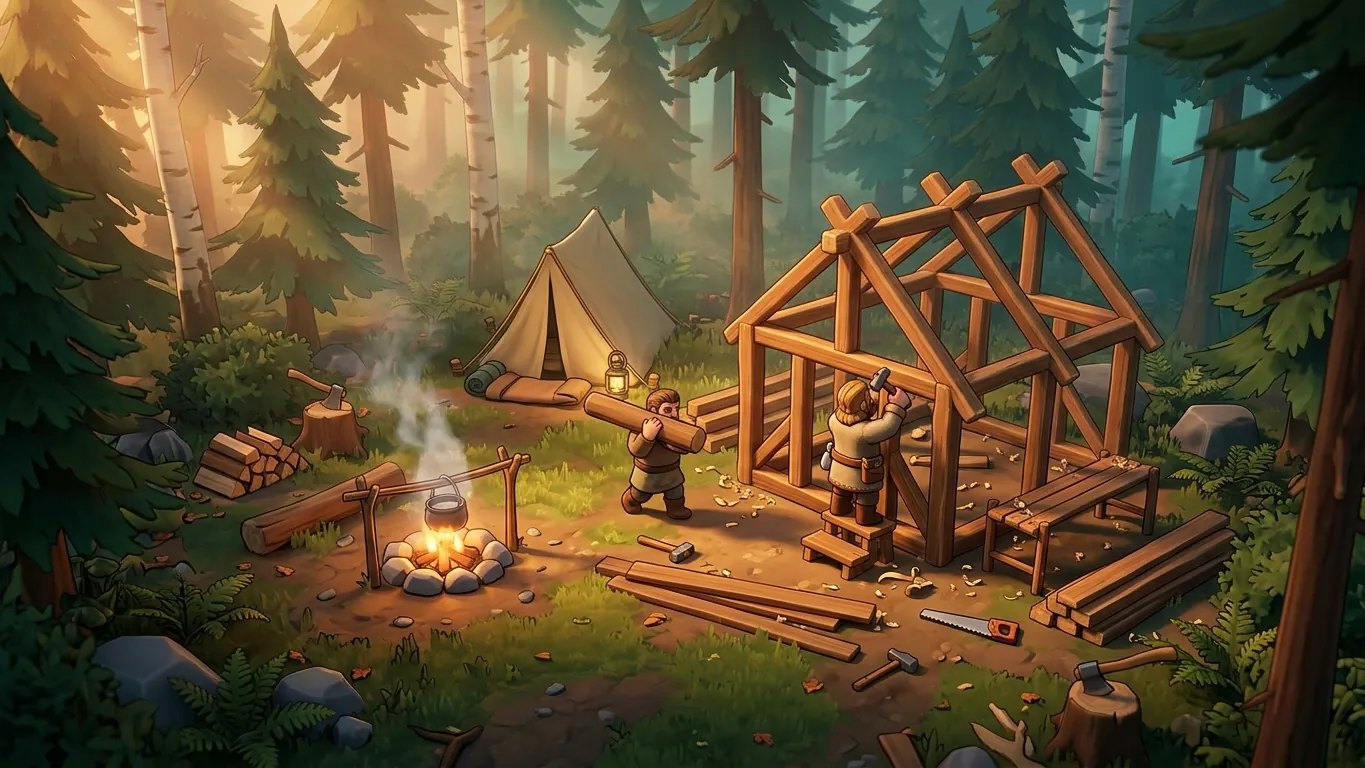
Early decisions compound. A base that secures food and basic materials quickly can grow steadily, while one that spends its first resources on decoration or advanced buildings may struggle to recover. Many games are designed so that the start is fragile on purpose: supplies are low, threats are close and every worker counts.
The good news is that the early game in most titles follows a familiar pattern. Once you recognize it, you can move through the opening with more confidence and less trial and error.
The names change from game to game, but these needs appear again and again.
Food, water, warmth or air, depending on the setting. Without these, nothing else lasts.
Usually wood, stone or scrap. It feeds almost every early building.
A place to rest and to keep materials from spoiling or being lost.
One simple building that turns raw materials into something more useful.
In the opening, aim for steady rather than spectacular. A small farm or a reliable gathering spot that produces a little more food than you eat is worth more than a large farm that will not be ready for a long time. The same applies to building materials: a constant trickle keeps construction moving.
Shelter and storage often get overlooked. In games with weather, decay or raiding, materials left in the open can disappear. A simple storage building near the center of your camp protects your early progress and shortens hauling trips. Once these basics are in place, you can start thinking about the first proper production chain.
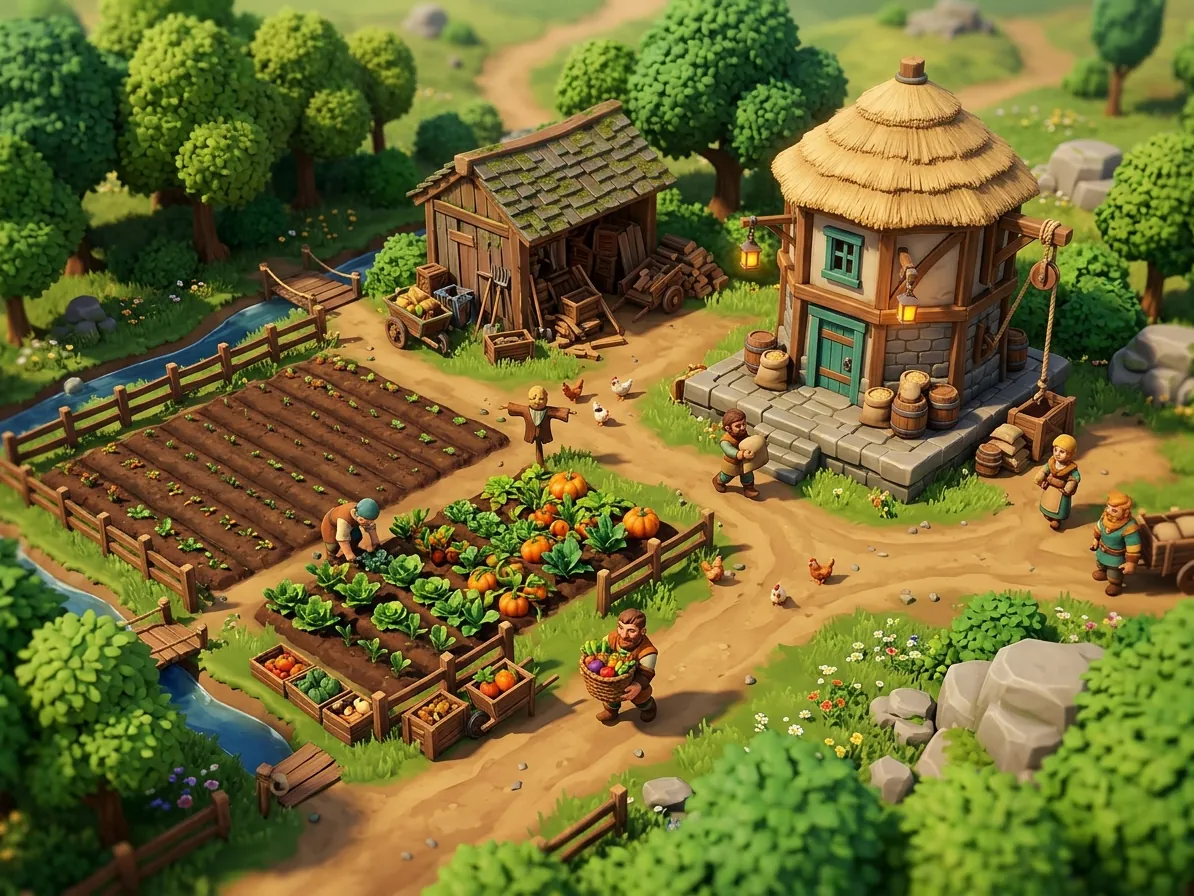
Some things are tempting early but rarely urgent. Decorations and comfort items often matter later, once your population or your character has stable needs met. Large defensive walls may be important in some games, but a few well-placed defenses near the core are usually enough at first. Advanced research or high-tier buildings tend to require resources you do not yet produce reliably.
That does not mean ignoring these entirely. It means building them when your economy can support them without causing a shortage elsewhere. If a purchase would empty your stock of a key material, it is often wiser to wait a little.
A helpful habit is to pause at the end of the early game and ask a few questions. Is food production comfortably ahead of consumption? Do you have a steady supply of the main building material? Is there a safe place to store goods? Are workers or your character spending most of their time working rather than walking?
If the answers are mostly yes, the base is ready to expand into more complex production. If not, spending a little more time strengthening the basics usually pays off. Every game has its own pace, so treat these questions as a checklist to adapt rather than a fixed timeline. A calm, solid start makes the middle of the game far more enjoyable.
 Storage and logistics: keeping goods moving
A practical guide to storage and logistics in base-building games: central versus distributed storage, hauling, transport and keeping things tidy.
Read more
 Defensive base design that still lets you grow
Tips for designing a defensible base in building games: approach routes, choke points, protecting key buildings and balancing defense with production.
Read more
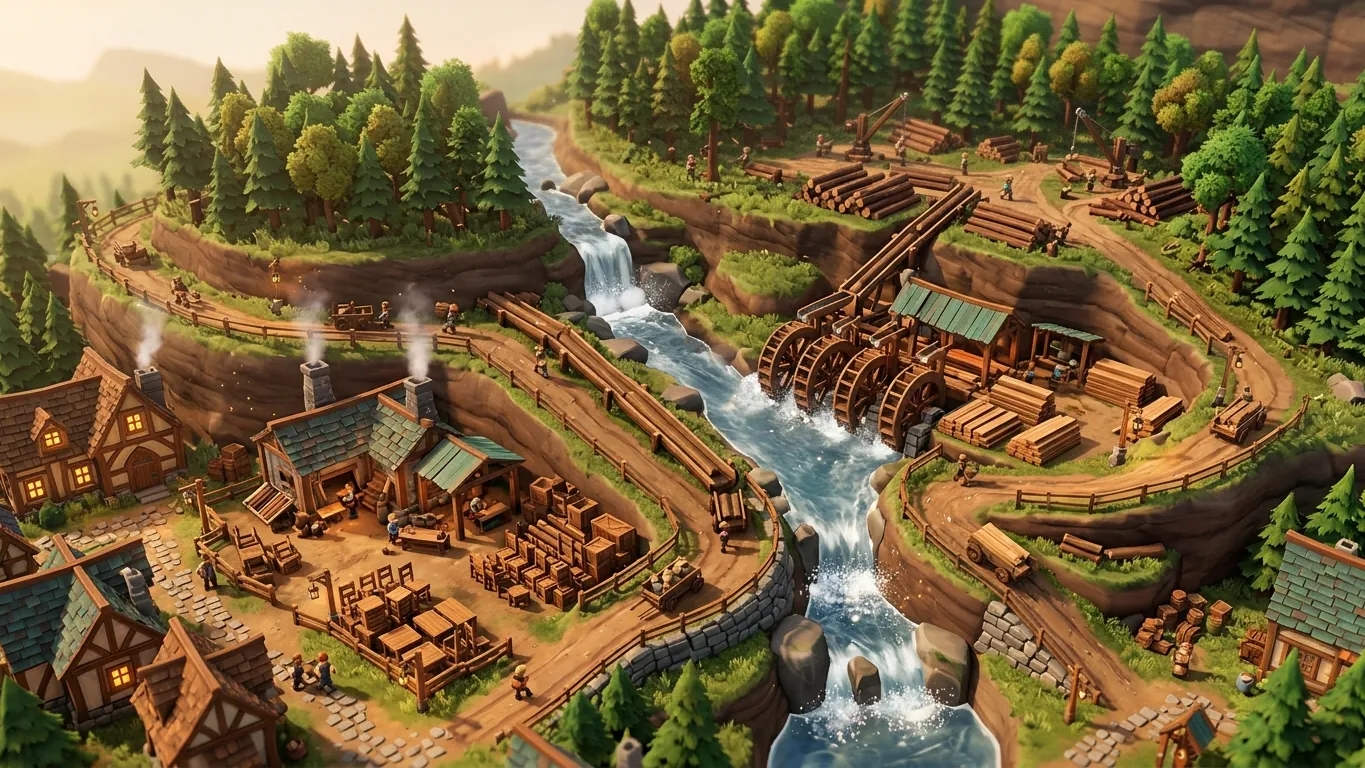 Production chains explained: from raw material to finished goods
An explainer on production chains in base-building games: how raw materials become finished goods, why ratios matter and how to build chains in stages.
Read more