Straight line
One input becomes one output through several steps, such as ore to metal to tools.
Production chains turn simple resources into valuable goods through a series of steps. This explainer breaks down how they work and how to build them without getting overwhelmed.
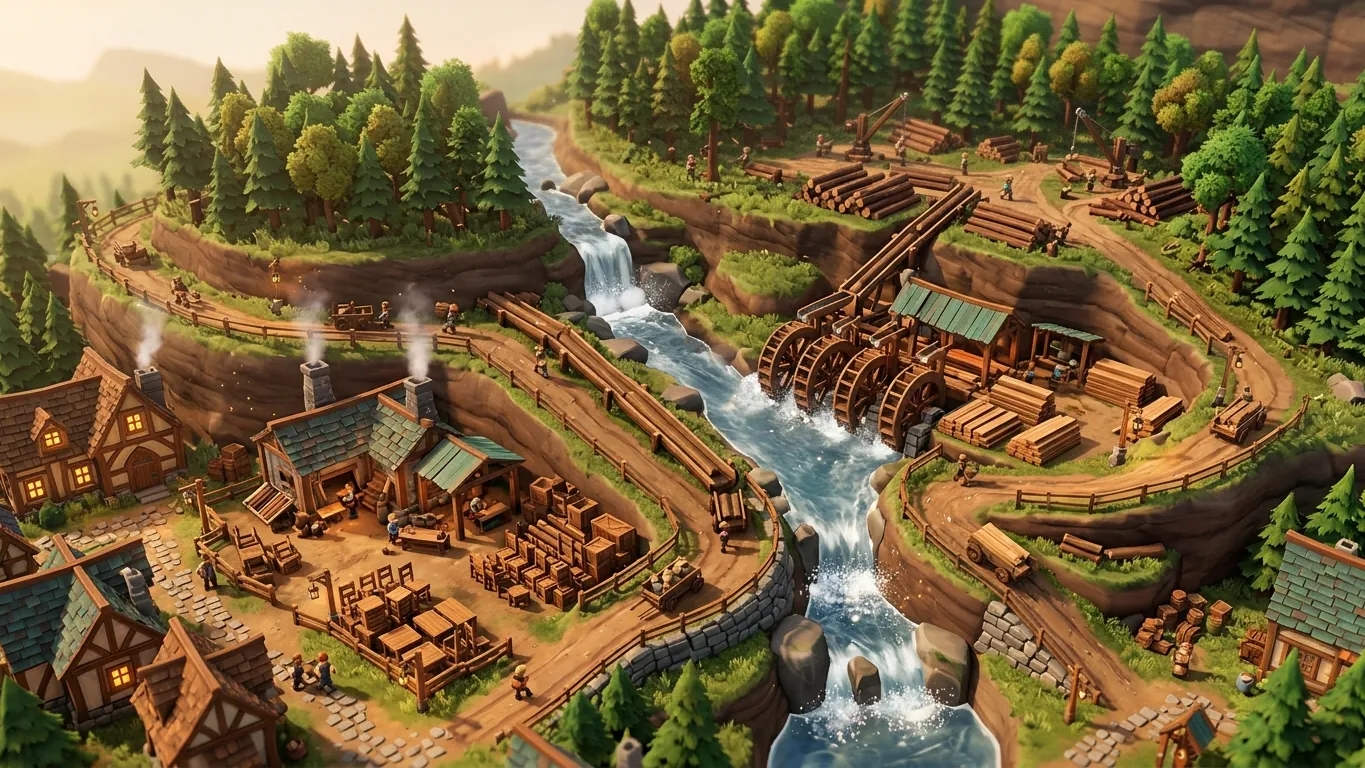
A production chain is a sequence of steps that transforms something basic into something more useful. Trees become logs, logs become planks, planks become furniture. Ore becomes metal, metal becomes tools. Each step usually happens in its own building or station, and each one depends on the step before it.
Chains are at the heart of most base-building games because they create goals and trade-offs. A finished product is often worth far more than its raw inputs, but it also demands more buildings, more workers and more planning. Understanding how chains fit together is what turns a scattered collection of buildings into a working economy.
Each building in a chain has a speed: how much it consumes and produces over time. When those speeds do not match, one part of the chain waits while another overflows. Ratios describe how many of each building you need so that the flow stays balanced.
For example, if one sawmill processes logs faster than one lumber camp can cut them, you may need two or more camps to keep the sawmill busy. You do not need perfect ratios to play well, and many games are forgiving. But knowing the rough balance helps you decide what to build next. Many games show input and output rates in building details, which is a good place to start your calculations.
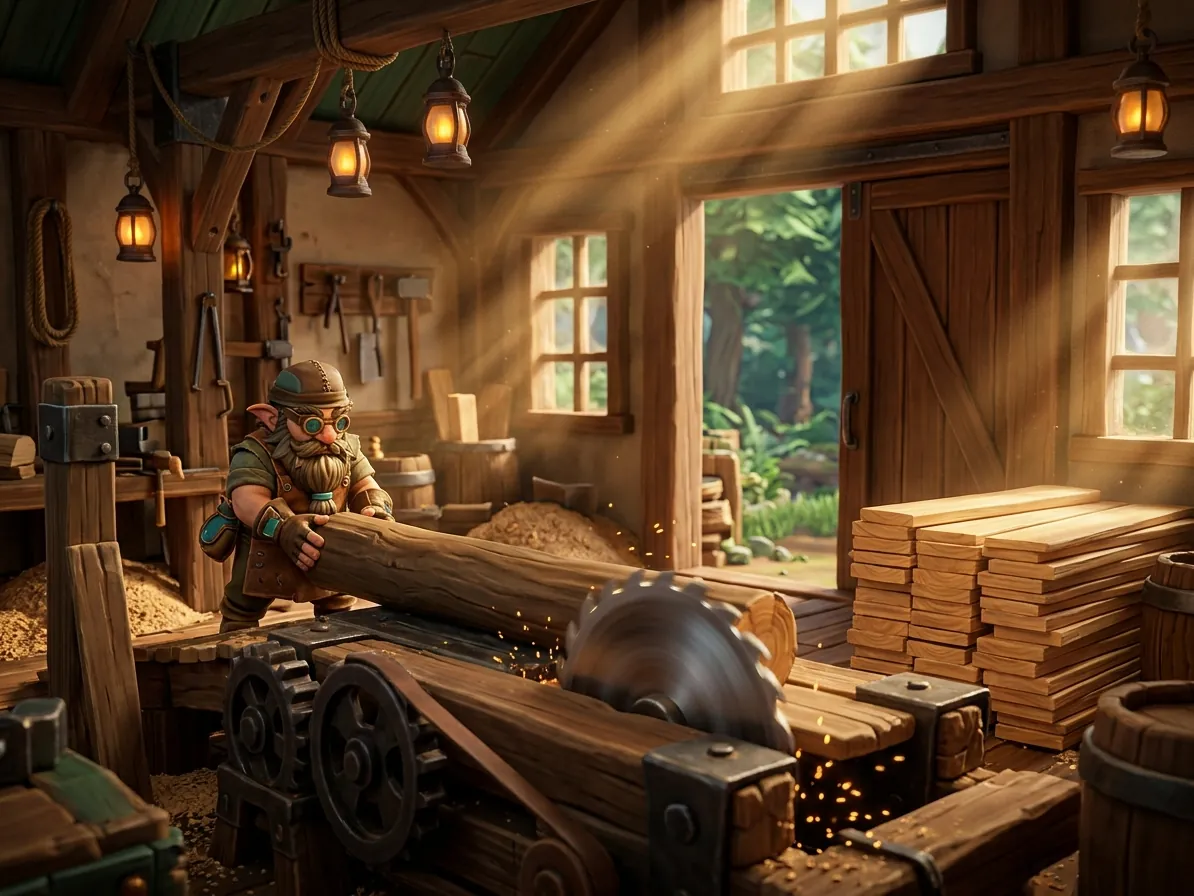
Trying to build a long chain all at once can lead to confusion and wasted resources. A calmer method is to build one step, confirm that it works and then add the next. Start with the raw material, make sure it is steady, then add the first processing building and watch whether it stays busy.
At each stage, ask whether the new building is starved, overfed or balanced. If it is starved, strengthen the step before it. If it is overfed, you have room to add another consumer or a further step. This staged approach also makes it easier to stop at a useful point; sometimes an intermediate product is valuable on its own and a longer chain can wait.
Chains vary between games, but a few shapes appear often.
One input becomes one output through several steps, such as ore to metal to tools.
Two or more inputs combine into one product, such as flour and water into bread.
One input feeds several different products, so you decide how to share it.
A product feeds back into an earlier step, such as tools that speed up gathering.
Chains are only as reliable as their weakest step. A shortage at the start ripples all the way to the end, and a full storage at the end can back up everything behind it. When a finished product stops arriving, trace the chain backward one step at a time until you find the first building that is not working as expected.
It can help to keep a small buffer of key intermediate goods so that a short interruption does not stop the whole chain. Merges deserve special attention, since a shortage of any single input halts the final step. With patience and a step-by-step mindset, even long and complex chains become manageable, and watching one run smoothly is one of the genre's quiet pleasures.
 Expanding your base without overextending
Tips on growing a base at a sustainable pace: signs you are ready to expand, hidden upkeep costs, a steady checklist and how to consolidate after growth.
Read more
 Common base-building mistakes and how to avoid them
A look at common base-building and resource management mistakes, why they happen and practical ways to avoid them in your next playthrough.
Read more
 Why slow, thoughtful base building feels so rewarding
An opinion piece on why patient, deliberate base building and resource management can be more satisfying than racing to the biggest possible base.
Read more