Building without a core
Scattering buildings everywhere makes trips long and the base hard to read.
Every builder makes mistakes, and many of them repeat across games. This article walks through the most common ones and simple habits that help you avoid them.
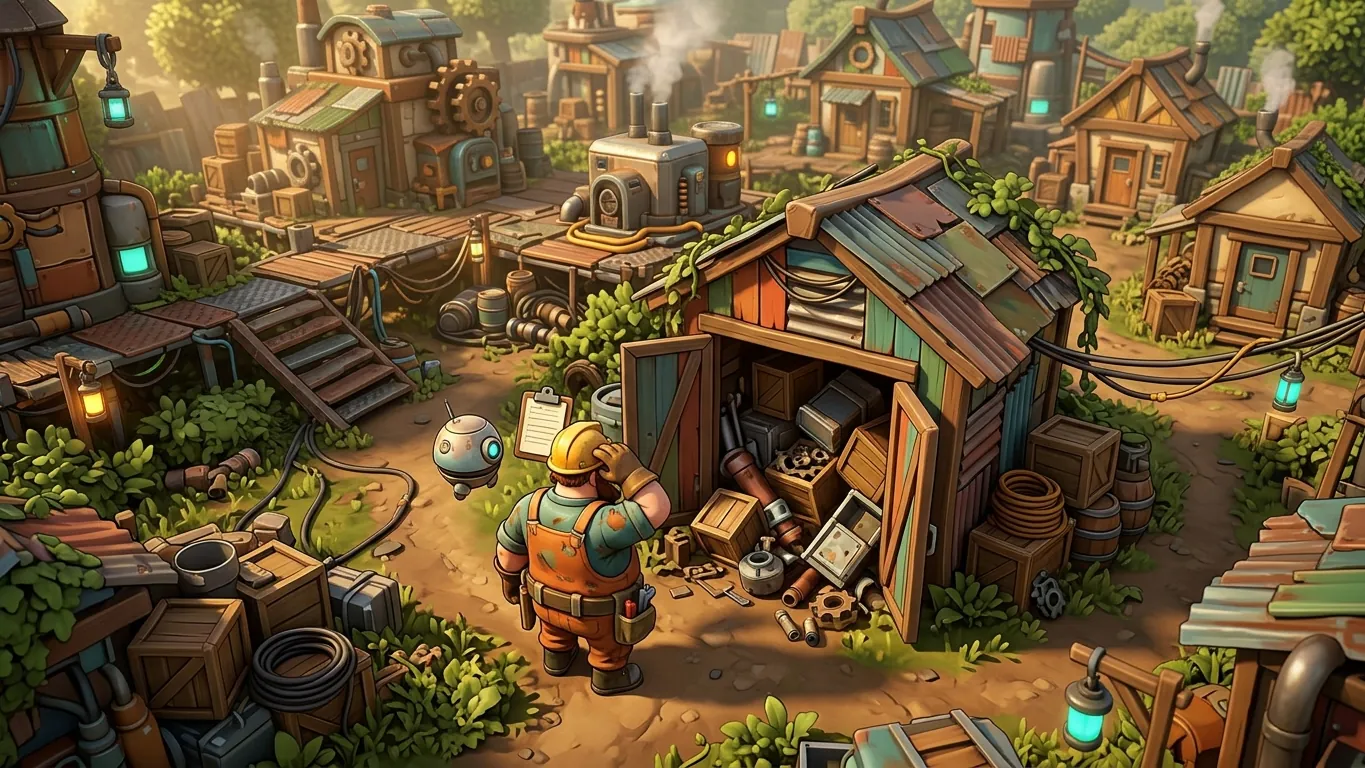
Base-building games are systems with many moving parts, and it is rarely possible to see every consequence of a decision in advance. A building that looks perfectly placed early on may block a road later. A choice that seemed thrifty may create a shortage hours afterward.
Making mistakes is how most players learn these systems. The goal of this article is not to promise a flawless base but to point out patterns that come up often, so you can recognize them sooner and correct them with less frustration. Many of these lessons apply whether you are running a colony, a survival camp or a sprawling industrial site.
These are frequent stumbling points across many building and management games.
Scattering buildings everywhere makes trips long and the base hard to read.
Chasing advanced buildings before food or basic materials are stable.
Adding storage instead of fixing the production step that is actually short.
Opening several new areas at once and stretching workers and defenses thin.
Placing permanent structures where upgrades or roads will be needed later.
Letting old routes and settings linger long after they stop making sense.
Most of these mistakes share a root cause: reacting to the problem in front of you instead of the system behind it. When food runs low, building another farm feels natural, even if the real issue is that cooks are too far from the fields. When the base feels crowded, adding storage feels productive, even if the true need is better routes.
Another cause is momentum. Once you start building, it is easy to keep going without stepping back. Games often reward constant activity with visible progress, which can make pausing to observe feel unproductive. Yet a few minutes of watching how workers move and where goods pile up often reveals more than an hour of building.
A few habits go a long way. Before placing a large or permanent building, ask where it will be in relation to the core and to the things it exchanges goods with. Before solving a shortage, trace it back to its first stalled step. Before expanding, check that essentials have a comfortable surplus.
It also helps to schedule small reviews. Every so often, look at your base as if seeing it for the first time. Are there buildings nobody uses? Paths that go nowhere? Stockpiles holding things you no longer need? Clearing these up keeps the base easier to manage.
When something goes wrong, it can be tempting to restart. Sometimes that is the right call, especially early in a game. But fixing a troubled base often teaches more than starting fresh. Relocating a district, rerouting a chain or rebuilding after a setback gives you a practical feel for how the game works.
Keeping a few notes between playthroughs can help as well: which layouts worked, which buildings needed more space and which shortages caught you off guard. Every game is different, so treat these notes as personal reminders rather than fixed rules. Over time, the same mistakes become rarer, and the ones that remain feel more like interesting puzzles than setbacks.
 Why slow, thoughtful base building feels so rewarding
An opinion piece on why patient, deliberate base building and resource management can be more satisfying than racing to the biggest possible base.
Read more
 Base layout fundamentals: planning space before you build
Learn the layout principles that help bases grow cleanly: a clear core, short travel distances, grouped buildings and space reserved for future changes.
Read more
 Finding and fixing resource bottlenecks
An explainer on resource bottlenecks in base-building games: how to spot them, trace a shortage to its source and decide which fix makes sense.
Read more