Base layout fundamentals: planning space before you build
A good base starts with a plan for space, movement and growth. This guide explains layout principles that hold up across most building and management games.
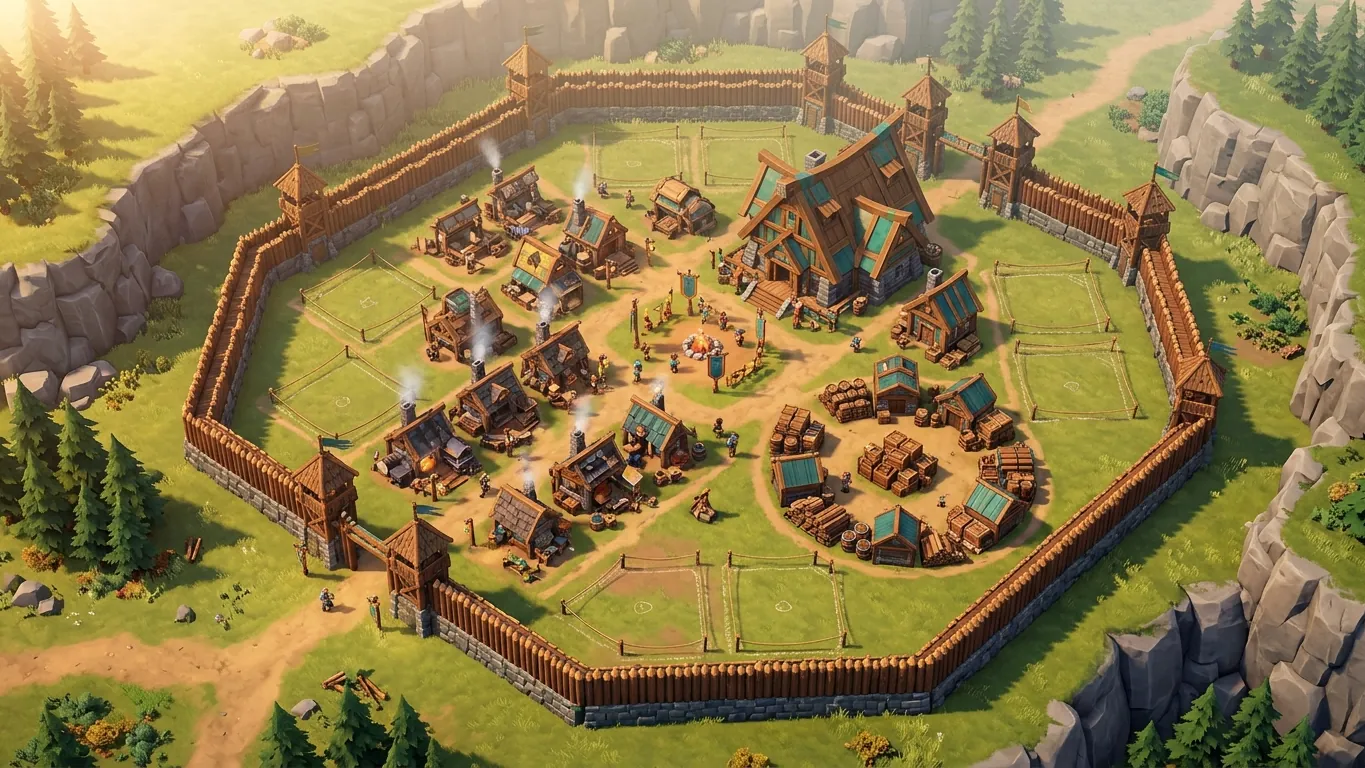
Start with a center of gravity
Every base benefits from a clear core: the place where most activity happens. In many games this is a main storage building, a town hall, a crafting hub or a landing pad. Deciding where that core sits is the single most important layout choice you make, because almost everything else will be measured by its distance from it.
A useful approach is to place the core near the resources you will use most often in the early game, but not so close that it blocks future expansion. Open ground on several sides gives you options later. If the map has natural features such as rivers, cliffs or ore deposits, take a moment to notice how they might shape where roads and buildings can go before committing.
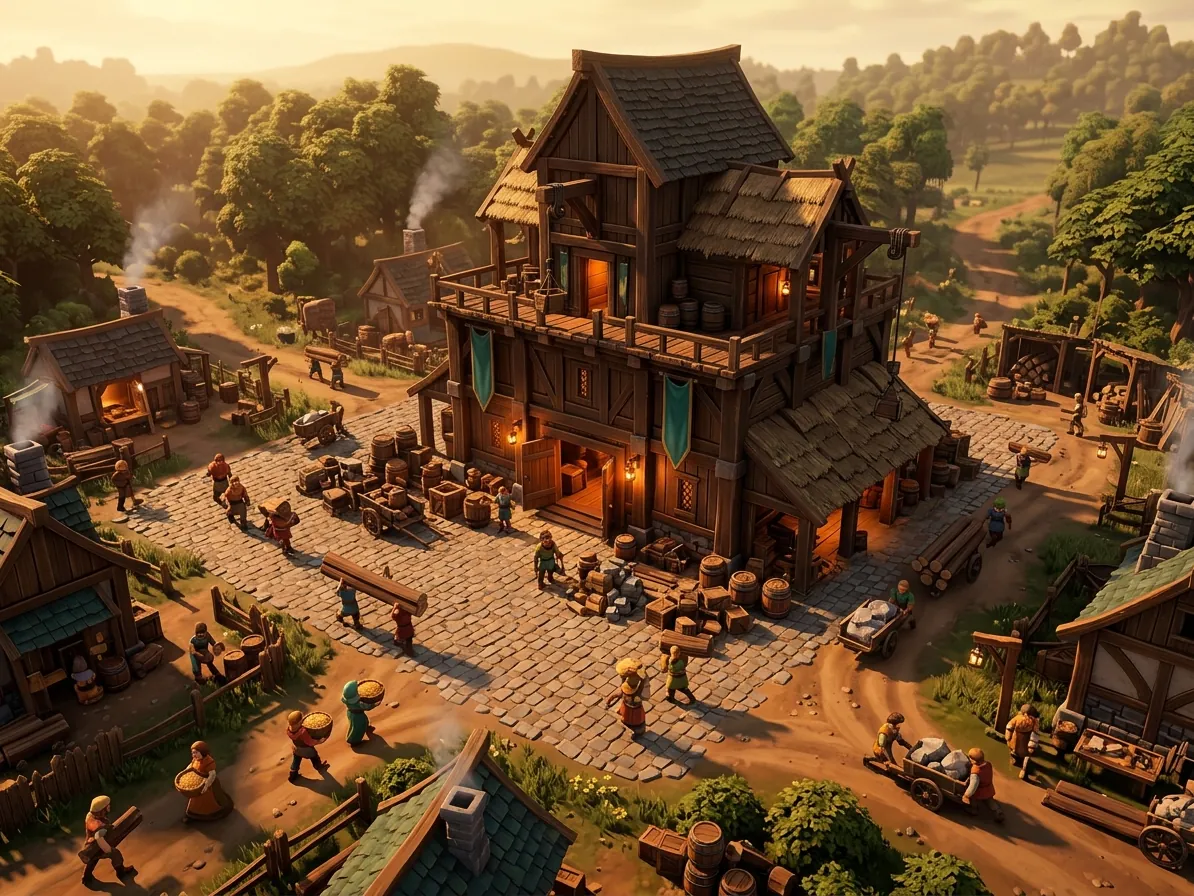
Keep travel distances short
In most base-building games, time spent walking or driving is time not spent producing. Workers who carry goods across the whole map, or a player character who runs back and forth between distant benches, slow the entire economy down.
The practical rule is simple: place buildings that exchange goods close to each other. A sawmill belongs near the forest and near the workshop that uses its planks. A kitchen belongs near both the farm and the homes of the people who eat. When you notice a long, repeated trip, ask whether one of the two buildings could move, or whether a small storage point halfway would shorten the route.
Group buildings by purpose
Grouping related buildings into districts makes a base easier to read and easier to fix. A food district, an industry district and a living district each have their own needs. Industry often needs space and access to raw materials, while living areas may benefit from being away from noise, pollution or danger, depending on how the game models them.
Districts also help when something goes wrong. If production stalls, you know where to look. If you want to upgrade a whole category of buildings, they are already together. Some players like to leave a small gap or a road between districts so that each one can grow without colliding with its neighbors.
A simple layout routine for a new map
This routine works as a starting point in many games. Adjust it to the rules of the one you are playing.
- 01
Survey the area
Look at terrain, resource nodes and any threats before placing anything permanent.
- 02
Place the core
Choose a central storage or hub location with open space on several sides.
- 03
Sketch the districts
Decide roughly where food, industry and living spaces will go, even if you build them later.
- 04
Lay main paths first
Connect the core to each future district with clear, direct routes.
- 05
Build in small batches
Add a few buildings at a time and watch how they interact before adding more.
Leave room to change your mind
No plan survives a whole playthrough unchanged. New technologies unlock larger buildings, new threats appear and your own priorities shift. The bases that age best are the ones that left some slack.
Try to reserve empty plots next to buildings you expect to upgrade, and avoid boxing important structures in with walls or decorations too early. Roads that are a little wider than strictly needed are easier to reroute. If the game allows cheap demolition or relocation, treat early buildings as temporary and be willing to move them once you understand the map better.
The goal is not a perfect layout on the first try. It is a layout that can be improved without tearing everything down. With a clear core, short trips, grouped districts and a little spare room, most bases can grow for a long time while staying easy to manage.
Related articles
 Finding and fixing resource bottlenecks
An explainer on resource bottlenecks in base-building games: how to spot them, trace a shortage to its source and decide which fix makes sense.
Read more
 Early game priorities: what to build first
A beginner-friendly look at what to focus on in the first hours of a base-building game: survival needs, a steady income and choices that can wait.
Read more
 Storage and logistics: keeping goods moving
A practical guide to storage and logistics in base-building games: central versus distributed storage, hauling, transport and keeping things tidy.
Read more